Water Plants And Your Pond
There are many different varieties of aquatic plants available to choose from. Most plants enjoy at least half a day of sun or more. However, there are a few plants that do grow well in the shade. Always try to learn a little bit about the plants that you want to purchase. So that you will be sure that they will fit into your pond properly.
Some plants can grow very large, while others stay small. Some plants may be very invasive, and potentially take over your pond, growing and spreading out of control. Some plants like to be in deeper water, while others just like “wet feet”.
Whatever kind of plant that you purchase, if you are not planting it directly into the gravel in your pond, you should repot it into a large container to give it room to grow, and a stable base in the wind. Normal top soil, and some gravel one inch or larger can be used. Repot it like you would any other plant. Put some gravel in the bottom of the pot to keep dirt from coming out of the holes, then dirt and the plant, (pack the soil in tight, and do not use potting soil). Then a layer of stone on the top of the dirt to hold the dirt in, and keep the fish from digging up the plant.
There are fertilizers available for your water plants. Do not use a common plant fertilizer that you would use on your garden, lawn or flower beds. They will kill your fish! Use only aquatic pond plant fertilizers. They are found in either a tablet or a liquid. I much prefer the tablets, as they are directly pushed down into the soil in the plant’s pot. They can be added a few times throughout the growing season.
We can break down the wide varieties of aquatic plants into four main categories. That makes it easier to figure out what we may want, and which plants fit where into our pond design. Ideally, your pond should have a few shelves at different levels of depth to accommodate the different types of plants.

Four Categories Of Aquatic Plants
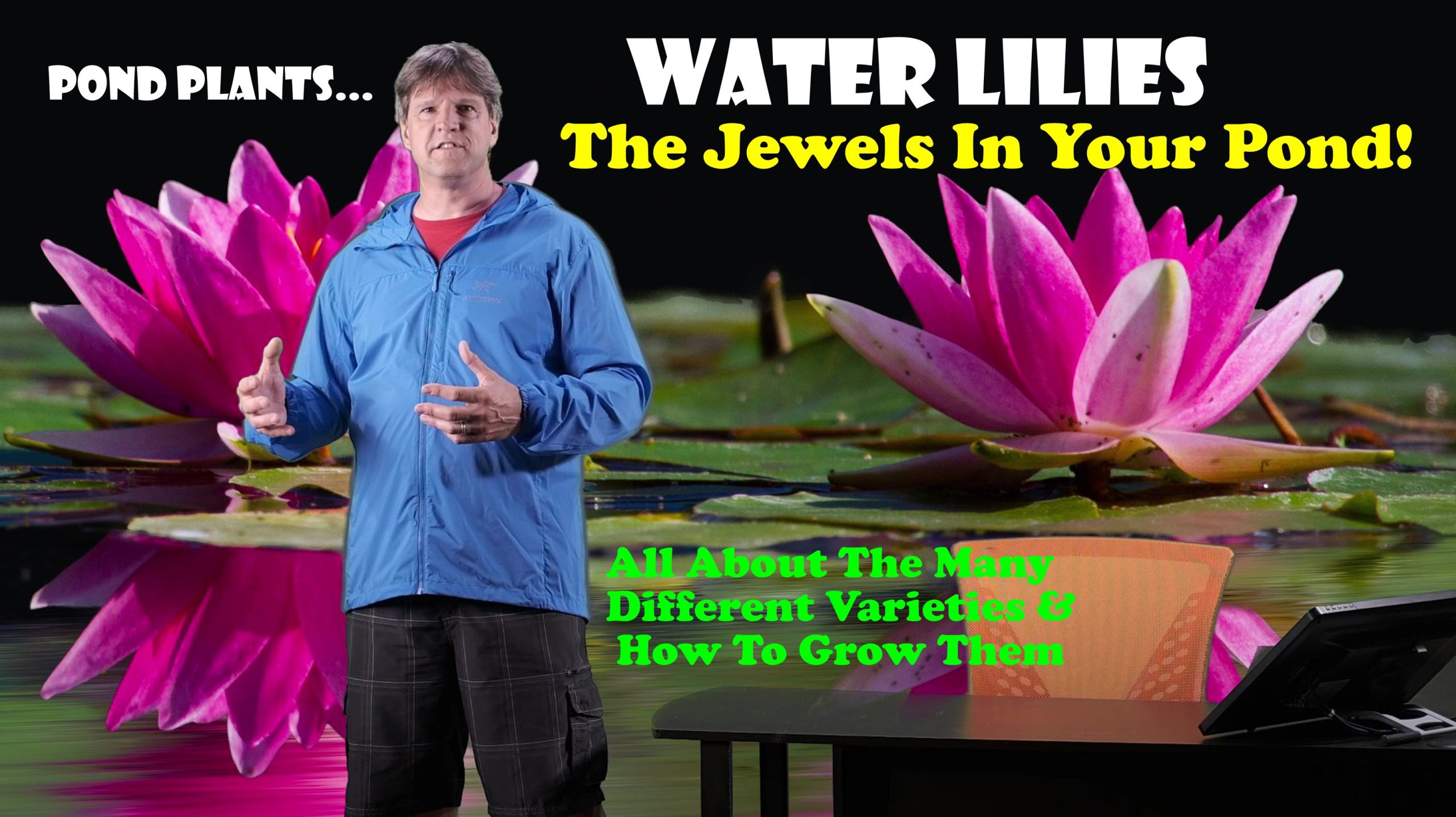
Water Lilies
Water lilies are the “jewels” of a pond. Commonly large plants that are potted in deeper water and hold their leaves and flowers on the surface of the pond. They are either Hardy (perennial), or tropical (annual). For a lot more information on Water lilies, see my you tube video shown below.
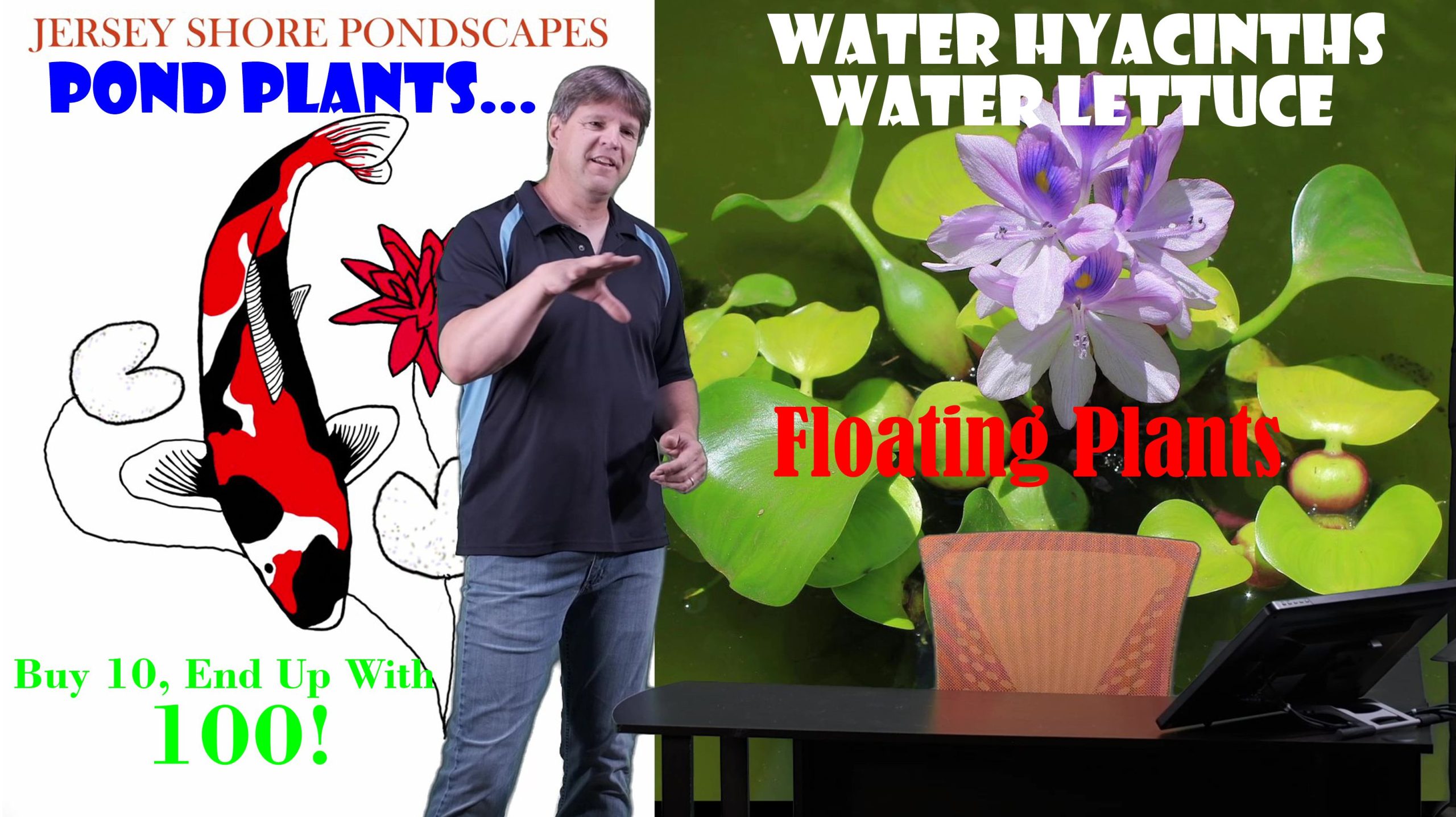
Floating Plants
These are simple plants, they just float on the surface. They do not need to be potted. These plants are great for filtering nitrates out of the water and providing beneficial shade for the pond, all of which helps to control algae and keep your water clear. Below is a video about some floating Plants.
Bog (Marginal) Plants
The most common plants and the broadest category of aquatic plats are the Bog or Marginal plants. These are the plants that grow around the shallow edges of the pond. A wide variety of grasses and flowering plants. I have several videos on my YouTube channel all about the various types of bog plants. One is pictured below.

Oxygenators (Underwater Plants)
These plants are planted and grown underwater. I am not a big fan of these plants. To me they are more of a gimmick than anything else. All plants are oxygenators, but that is only during daylight when photosynthesis occurs. At night, they absorb all the oxygen from the water. Nobody tells you that part!
A Koi Pond And A Water Garden Are Two different Things!
Large koi may often be destructive to water plants, and therefore ideally should be separated. A koi pond is often a pond specifically for koi. The koi are the main attraction of the pond. Koi owners often look down on plants, saying that they just make a mess in the pond. A Water Garden is a pond specifically designed just for plants. To grow all of the beautiful water lilies and other flowers, a “Garden”. Here some fish are also included, but the best choices are goldfish (Comets), Shubunkin, and even Golden Orfes. A few small koi can be included too.
For many people, we want it all, plants and koi. It can work, but some precautions may need to be in place to protect the plants as the koi grow larger. Especially when the lay their eggs. They can get quite violent, ripping plants apart or knocking pots over. It’s all good, just be prepared. Sometimes the koi don’t do much damage, but other times plants are just not possible.
When designing your pond, think about what kind of pond you want. Add shelves at different levels if you would like plants, or maybe eliminate the shelves altogether if you just want a pond for koi. Koi ponds must also be deeper as well. See my video below for more information.
